EMDR & And What It Can Do For You
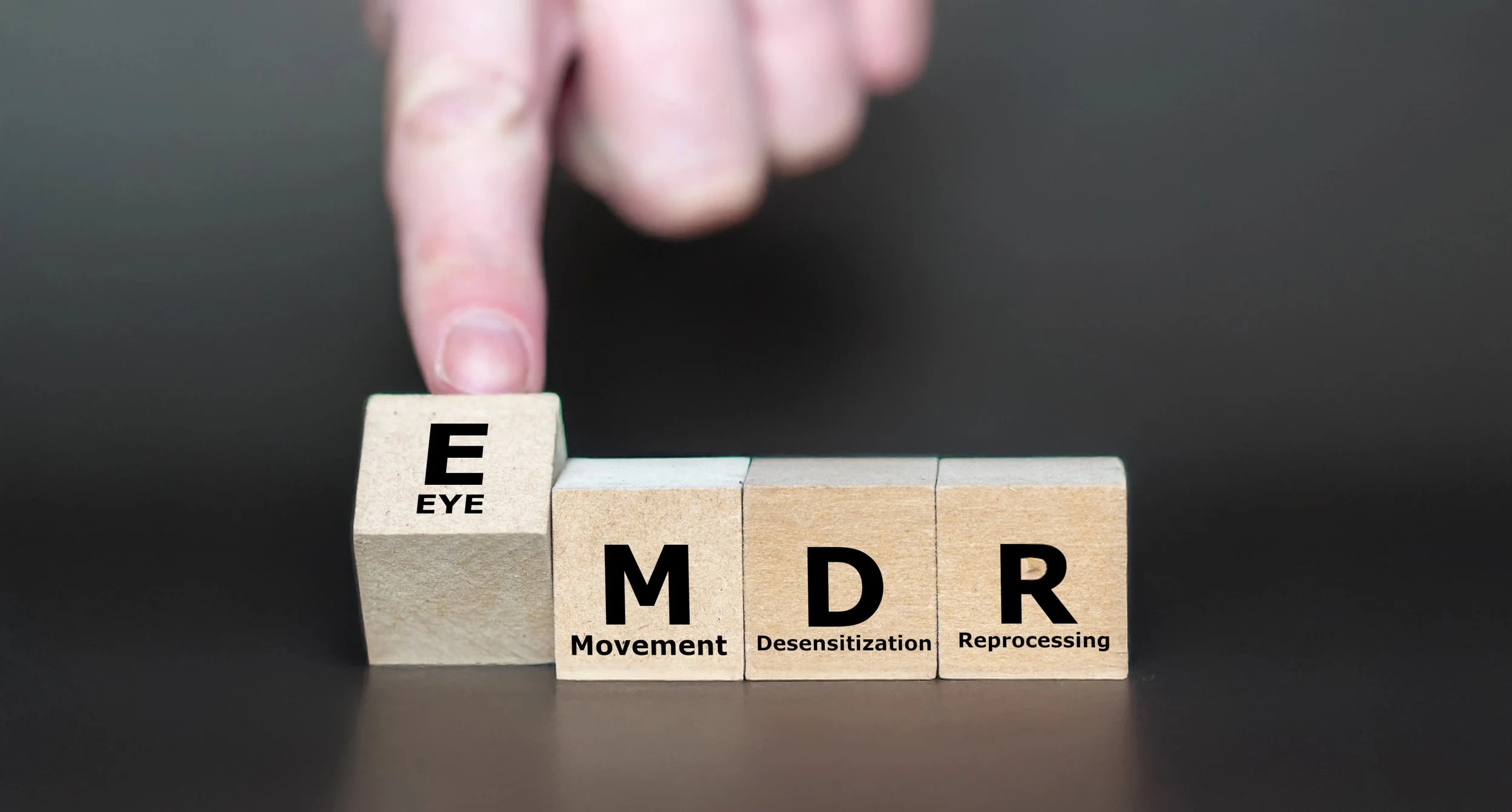
EMDR was created by Francine Shapiro in 1987, with the initial goal of helping individuals process their traumatic and distressing memories. Oftentimes, people who have experienced trauma suffer from various symptoms such as intrusive thoughts, nightmares, and intense emotional reactions when reminders of the traumatic event are encountered.
EMDR is effective due to its use of bilateral stimulation (BLS). BLS consists of alternating, rhythmic stimulation across both hemispheres of the brain. This can be done through various methods, such as eye movements (following a therapist’s fingers or a light bar), tapping (alternately tapping on the client’s knees or hands), or auditory tones (alternating sounds in each ear). The rationale behind this approach is that the bilateral stimulation helps the brain to reprocess the traumatic memories. Rather than being stuck in a “fight or flight” state, the brain is able to integrate these memories into the larger context of a person’s life, diminishing their emotional impact.
A typical EMDR session involves several stages. The therapist begins by gathering a detailed history of the client’s trauma and identifying the specific memories that need to be targeted. The client is then asked to focus on a particular memory while simultaneously engaging in the bilateral stimulation. The client is instructed to notice any thoughts, images, or feelings that arise during the process, without judgment or censorship. The therapist will guide the client through sets of BLS, with short breaks in between to check in on the client’s experience. As the session progresses, the client’s distress level typically decreases, and the memory becomes less vivid and emotionally charged.
One of the key advantages of EMDR is that it can be a relatively brief form of therapy. While the number of sessions required varies depending on the individual and the severity of their trauma, many people experience significant improvement in a matter of weeks or months. This is in stark contrast to more traditional forms of talk therapy, which can often take years to achieve similar results. Moreover, EMDR has been extensively researched and has been found to be an effective treatment for a wide range of trauma-related disorders, including PTSD, anxiety, and depression. The American Psychiatric Association and the Department of Veterans Affairs now both recognize EMDR as an effective treatment for PTSD.
Now you may be wondering, “How can EMDR help me? Am I traumatized ‘enough’ for EMDR treatment?” The short answer: yes! Trauma is not a competition. If you feel that there’s a memory or event in your life that continues to cause you distress or hold you back, EMDR could be a valuable tool for you. It is not reserved only for those with a PTSD diagnosis; it can also help with a range of other issues, such as phobias, performance anxiety, and self-esteem problems. The goal of EMDR is not to erase memories but to transform them from painful, raw wounds into neutral, manageable parts of your past.
If you’re still struggling to understand exactly how EMDR works and how it might be relevant to you, it may be helpful to think of it in the context of a metaphor. For instance, if the brain is like a computer where every memory is a ‘file’, then the traumatic or distressing memory is like a corrupted file in your system. When you try to open that file or when the file is opened ‘accidentally’ (for example, through a triggering event or circumstance), your whole system shuts down. EMDR does not attempt to ‘delete’ this corrupted file; instead, it repairs the code so that that the operating system (your brain) can easily access the file without freezing or crashing.
In essence, EMDR is not about forgetting painful memories, but about learning to coexist with them without being controlled by them. It is a gentle yet powerful method that helps to transform the emotional charge of these memories, allowing you to reclaim your life and your ability to live fully in the present.